Common Mistakes to Avoid With Gutter Repair in Hackettstown

Gutters do not ask for much attention until they fail, and by then the repair is rarely just about the gutter itself. In Hackettstown, where a house might see heavy spring rain, summer storms, falling maple seeds, and a steady load of autumn leaves, small gutter issues have a habit of turning into siding damage, fascia rot, foundation staining, and icy walkways. I have seen homeowners spend weeks debating a loose section of gutter, only to discover the real cost was the moisture quietly working behind it.
That is what makes gutter repair one of those jobs where the mistakes matter more than people expect. The problem often looks simple from the ground. A drip at a seam, a corner pulling away, water spilling over the front edge. Yet the underlying cause could be pitch, fastener failure, hidden wood rot, a clogged downspout, undersized drainage, or an earlier repair done with the wrong materials. If you are planning Gutter Repair Hackettstown services for your home, or deciding whether to tackle part of the work yourself, it helps to know where repairs commonly go wrong.
Treating overflow like a gutter problem only
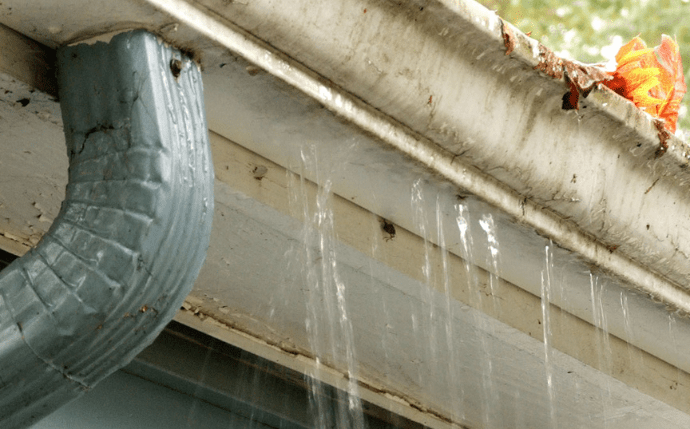
One of the most common mistakes is assuming every overflow issue starts and ends with the gutter channel. Sometimes it does. A clog of wet leaves and roof grit can create a simple dam, and cleaning restores normal flow. But overflow can also point to roof runoff that exceeds the gutter capacity during hard rain, especially at inside corners or below steep roof sections. It can happen when the gutter has lost pitch and water ponds instead of moving toward the downspout. It can happen when the downspout is technically open but partly blocked lower in the run, slowing discharge enough to force water over the lip.
A homeowner may see water pouring over one spot and decide to patch the nearest seam with sealant. The leak stops for a week, but the next storm sends water right back over the edge because the true issue was standing water caused by sagging hangers six feet away. I have seen this exact sequence more than once. The repair looked tidy, but it addressed the symptom, not the system.
Hackettstown homes vary quite a bit in age and roofline complexity. Older homes may have fascia boards that are no longer sound enough to hold standard fasteners well. Newer additions sometimes create awkward valleys that dump a lot of water into a short gutter run. A repair decision that ignores those conditions is usually a short-term fix.
Relying too heavily on caulk and gutter sealant
Sealant has its place. It is useful on properly prepared seams, end caps, and certain pinhole leaks when the metal is still structurally sound. The mistake is treating sealant as a cure for movement, separation, or corrosion that has already advanced too far.
If a gutter joint keeps opening because the run is pulling apart under weight, adding more caulk is like painting over a crack in plaster without stabilizing the wall behind it. It may look solved from the driveway, but weather will expose the weakness quickly. Sealant also fails when applied to dirty, wet, oxidized, or unstable surfaces. Many rushed repairs happen on damp metal because the homeowner is trying to fix a leak during a storm, which is understandable and almost never effective.
Another issue is product mismatch. Different metals and coatings react differently, and not every general-purpose exterior sealant bonds well to aged gutter material. A tube labeled for outdoor use is not automatically the right choice for a gutter seam exposed to freeze-thaw cycles, direct sun, debris abrasion, and constant water movement. In northwest New Jersey, where temperatures swing sharply through the year, that matters more than the label at the hardware store suggests.
A good repair often uses sealant as one piece of the fix, not the whole fix. If the seam is separating because the section lacks proper support, or because the adjoining piece is bent out of shape, the right move may involve rehanging, refastening, or replacing that segment before any sealant goes on.
Ignoring the fascia and soffit behind the gutter
This is where many gutter repairs in Hackettstown get more expensive than expected. Gutters attach to something, and if that something has softened from long-term moisture, a clean-looking repair can fail fast. Screws strip out. Hangers loosen again. The gutter line sags in the same place a month later, and it looks as if the repair itself was poorly done. In reality, the substrate never had the strength to hold it.
You do not always see fascia damage from the ground. Paint can hide quite a bit. Aluminum wrap can hide even more. But clues show up if you know where to look. The gutter may pull away in several spots rather than one. The front edge may dip after rain because water weight is flexing weak backing. You may notice staining on the soffit, or paint blistering just under the roof edge.
Repairing a gutter without checking the wood behind it is one of the costliest shortcuts because it leads to repeat work. The crew comes out, resets the gutter, charges for labor, and later has to come back when the hidden rot finally gives way. On a straightforward one-story section, the fascia repair may add a manageable amount to the job. On a two-story front elevation with landscaping, power lines nearby, or tricky ladder access, repeating the setup alone can eat into the budget.
Using the wrong fasteners or spacing them poorly
Fasteners are not glamorous, but they determine whether a repair holds. Older spike-and-ferrule systems are still found on many homes, and they often begin to loosen after years of expansion, contraction, and water weight. Replacing a few spikes with new spikes can buy a little time, but in many cases hidden hangers with properly driven screws offer a more dependable repair. The mistake is either using the wrong hardware for the material and structure, or spacing hangers too far apart.
A gutter can look straight when it is empty and still fail under load. Wet leaves are heavy. Slushy snow is heavier. Add a clogged downspout, and the load increases fast. If hangers are too sparse, the front lip can twist, the rear edge can pull, and the run loses pitch in between supports. This is especially common in repairs where someone focuses only on the visibly loose area and leaves long unsupported spans unchanged.
Fastener length matters too. A short screw driven into soft fascia may feel snug at first and work loose with the first serious storm. Overdriven screws can crush weak material and reduce holding power. Mixed metals can accelerate corrosion in some circumstances. None of these details are dramatic on their own, but they are the difference between a repair that survives several seasons and one that lasts until the next storm.
Setting the wrong pitch
Pitch errors are common because a gutter can be off by a surprisingly small amount and still create noticeable trouble. Too little slope and water sits in the trough, collecting grit and encouraging corrosion. Too much slope and the run can look visibly crooked, with reduced capture performance near the high end. The challenge is that many homeowners, and even some handymen, try to fix a low spot by lifting one section without checking the entire run from end to end.
On a long stretch, especially across the front of a house, small adjustments ripple. Raise one hanger too much and the next section becomes the low point. Correct a corner and the downspout connection may end up strained. If the existing gutter was installed with poor pitch to begin with, isolated repairs can make the geometry worse.
Hackettstown weather makes pitch mistakes more obvious. During a gentle rain, a flawed run may seem adequate. During a fast summer downpour, every low spot reveals itself. Water that should be moving briskly to the downspout starts backing up, and the homeowner assumes the gutter needs cleaning again. Sometimes it does. Sometimes the real problem is that water never had a clear path.
Overlooking downspout discharge
A repaired gutter is only as effective as the path the water takes after leaving it. I have seen carefully patched and rehung gutters continue to cause foundation problems because the downspouts discharged too close to the house, into compacted mulch beds, or onto walkways that pitched back toward the structure. The homeowner was not wrong to repair the gutter, but the repair was incomplete.
This matters in neighborhoods where lots are modest and drainage patterns are tight. A downspout that dumps three feet from the foundation may be fine in sandy, well-draining soil during average weather. It is a different story when the ground is saturated after several days of rain. Water pools, splashes onto siding, stains masonry, and in cold weather may freeze where people walk.
When planning Gutter Repair Hackettstown work, look at the whole water route. Does the downspout run clear? Does the elbow at the bottom clog with shingle grit? Does the extension stay attached? Is there evidence of erosion at the outlet? A gutter repair that stops the visible leak but leaves poor discharge in place will not protect the house the way most people expect.
Climbing up for a quick fix without addressing safety
This may sound obvious, but it is one of the most repeated mistakes because gutter defects often look small enough to tempt a quick ladder job. A single loose bracket. One leaking end cap. A downspout elbow that slipped apart. The problem is not just the height. It is the posture, the reach, the tools, and the fact that gutter work is often done when surfaces are wet, windy, or cluttered with debris.
Many injuries happen when someone leans too far sideways to avoid moving the ladder. Others happen because the ladder feet are set on mulch, pavers, or uneven ground that looks stable until weight shifts. On split-level homes and front entries, rooflines can create awkward access that increases risk well beyond what the task seems to warrant. Even a one-story section can be dangerous if the ground slopes or the work area sits above shrubs and retaining edges.
There is also a quality issue tied to safety. People working from an unstable position tend to rush. They drive a screw slightly crooked, miss hidden wood decay, skip a hanger, or smear sealant onto a damp seam because they want off the ladder quickly. The result is not just a risky repair, but a poor one.
Waiting too long because the damage seems cosmetic
A stained gutter, a small drip, or a short sag near one bracket can look cosmetic, especially if no water is getting into the basement and no interior leak is visible. That delay is expensive because gutters often fail slowly and then all at once. A minor seam leak can soak the fascia over months. A modest pitch issue can keep water standing in the trough, which adds weight, traps debris, and corrodes the metal from inside. A loose downspout strap can lead to a separated elbow, which then dumps water beside the foundation through an entire season.
Homeowners often tell themselves they will address it after leaf season, then after winter, then when they schedule another exterior project. Meanwhile, a repair that might have involved a seam, a few hangers, and a cleaning turns into section replacement, fascia carpentry, and paint work. The timing matters. Addressing a problem in the dry part of the year usually gives more options than dealing with the aftermath during a stretch of storms.
Assuming every damaged section should be replaced
The opposite mistake also happens. Some contractors are too quick to recommend full replacement when a well-executed repair would be sensible. Not every separation means the system is at the end of its life. If the metal is still sound, the profile is intact, and the issue is localized to a seam, hanger line, or corner, repair can be the practical choice. This is especially true if you are trying to extend the life of the current system while planning larger exterior upgrades later.
The judgment https://holdenweil293.theglensecret.com/when-to-repair-instead-of-replace-gutters-in-hackettstown comes down to condition and proportion. If one ten-foot section is badly dented from a fallen branch but the rest of the run is solid, replacing that section may be enough. If multiple seams are failing, oxidation is widespread, and the fascia behind several areas is compromised, piecemeal repair can become false economy.
A good contractor should be able to explain that distinction clearly. If someone recommends replacing everything without discussing the actual condition of the existing system, ask more questions. At the same time, be wary of the person who promises to save every old gutter with a tube of sealant and a handful of screws. Real expertise usually sounds more measured than either extreme.
Forgetting that leaf guards do not solve repair issues
Leaf guards can reduce debris buildup in the right setting, but they do not fix structural or drainage problems. This misunderstanding creates a lot of frustration. Homeowners with overflowing gutters are sometimes sold guards before the gutter line is corrected, the downspouts are cleared, or the loose sections are rehung. The system looks upgraded, yet water still spills because the fundamental issue remains.
There are also cases where guards complicate inspection. If the gutter is hidden beneath a cover, it becomes easier to miss standing water, seam separation, or backed-up roof grit. On houses surrounded by trees, some guard systems perform better than others, and none make the gutter maintenance-free. Fine debris, seed pods, and shingle granules still find ways to accumulate over time.
If you are considering guards as part of a Gutter Repair Hackettstown project, make sure the repair comes first. A stable, properly pitched, well-supported gutter gives any guard system a better chance to perform as intended.
Missing seasonal timing
The same repair can be simple in one month and difficult in another. Late fall often brings the highest demand for gutter work because people notice problems when the leaves are coming down and storms start stacking up. Early winter can expose hidden trouble as meltwater refreezes at edges and walkways. Spring reveals what winter loosened. That timing affects cost, scheduling, and how complete the repair can be.
For example, sealing seams in ideal dry conditions is one thing. Trying to do the same after repeated freeze-thaw cycles and persistent damp weather is another. Wood behind the gutter may be harder to evaluate when everything is saturated. Temporary fixes sometimes become the only safe option until conditions improve.
This does not mean you should wait for a perfect season. It means you should understand that timing influences both the method and the result. A contractor who mentions season-specific limitations is usually paying attention.
What a careful repair assessment should cover
Before anyone starts tightening screws or applying sealant, the repair should be assessed as a water-management issue, not just a metal-trim issue. A thorough look usually includes the following:
- The condition of the gutter material itself, including seams, corners, and any corrosion
- Hanger type, spacing, and whether the fascia can still hold fasteners properly
- Pitch across the entire run, not just at the visibly failing area
- Downspout flow and discharge location at grade
- Signs of collateral damage on fascia, soffit, siding, and the ground below
That five-part review catches most of the hidden causes behind repeat failures. It also helps separate jobs that are genuinely repairable from those where replacement or carpentry is the wiser route.
Choosing help based on diagnosis, not just price
Price matters, but gutter repair is one of those trades where the cheapest estimate can be the most expensive outcome. A low number often reflects a narrow scope. Tighten the loose part. Add some sealant. Reattach the elbow. Done. If the person never discusses pitch, fascia condition, or discharge, the estimate may be cheap because the diagnosis is shallow.
On the other hand, the highest estimate is not automatically the most honest either. Some companies prefer replacements because they are easier to standardize and more profitable to schedule. The best conversations are usually practical and specific. You want to hear what is failing, why it is failing, and what happens if you repair only part of the problem.
A homeowner in Hackettstown should also keep local weather in mind when weighing recommendations. An area that sees regular leaf load, winter freeze cycles, and the occasional intense thunderstorm puts more stress on a marginal gutter system than a milder climate would. A repair that sounds acceptable on paper may not hold up well here if it leaves too much weakness in place.
A few warning signs that should not wait
Some gutter problems can be scheduled around convenience. Others should move to the top of the list because the risk extends beyond the gutter.
- gutters pulling away more than a little from the fascia
- water running behind the gutter instead of into it
- repeated overflow in the same area after cleaning
- visible staining or soft spots on fascia or soffit
- downspouts discharging at the foundation with obvious pooling
Those signs suggest the water is already affecting the structure or the safety of the property. Fast action usually limits the damage.
The repairs that age well
The best gutter repairs are not the prettiest on day one. They are the ones that still perform after a season of storms, a winter of freeze-thaw movement, and another round of falling leaves. That kind of durability usually comes from restraint and good judgment. Fix what is failing, verify why it failed, and do not pretend one product or one technique solves every condition.
For homeowners thinking about Gutter Repair Hackettstown services, the key is to slow down just enough to diagnose the problem properly. Gutters sit at the edge of the roof, but their effects reach much farther. They influence siding, trim, walkways, landscaping, and the foundation itself. A rushed repair can hide trouble for a while. A careful repair protects the house.
That is the real difference between a gutter job that feels cheap and one that proves worthwhile. It is not just whether the drip stops today. It is whether the repair keeps water moving where it belongs when the next hard rain hits Hackettstown.
Just Gutters LLC
Address: 262 Main St, Hackettstown, NJ 07840
Phone number: +12013319454
FAQ About Gutter Repair Hackettstown
What is the average cost to repair gutters?
The average cost to repair gutters is about $390, with most jobs ranging from $120 to $900 depending on the damage. You can explore detailed data and estimates on Angi.
Can I repair a gutter myself?
Yes, you can easily repair most common gutter problems yourself if you are comfortable working on a ladder.
How much does it cost to repair a leaking gutter?
The average cost to repair a leaking gutter ranges from $75 to $350. Most homeowners spend around $150 to $250 to hire a professional to patch small holes or reseal leaking joints. If the damage is severe and requires replacing entire sections, the price can increase from $300 to $800.